Endowment Effect: How Mock-Up Stickers on Buyers’ Personal Items Increase Purchase Intentions
Why We Fall in Love With What We Already “Own”
Psychologists Daniel Kahneman, Jack Knetsch, and Richard Thaler proved something strange back in the 1990s: once people believe an object belongs to them, they value it more than before they owned it. This is the endowment effect, and it explains why a coffee mug feels more valuable the moment your name is printed on it, or why a sticker feels more “yours” once it’s stuck on your laptop rather than sitting in a shop window.
Online shopping strips away the physical act of holding a product before buying it. That’s a problem for sticker sellers, because stickers are inherently tactile — they’re meant to be peeled, pressed, and placed on something personal. A flat image of a sticker on a white background doesn’t trigger any sense of ownership. A sticker mockup does.
The Psychology Behind Mockups on Personal Items
When a customer sees a sticker realistically applied to a laptop lid, a water bottle, a skateboard, or a car bumper, their brain does something interesting: it mentally simulates ownership. This is sometimes called “affective forecasting” — imagining how an item will feel once it’s part of your daily life.
A few reasons this works so well:
- Context replaces imagination. Instead of guessing how a sticker will look on a MacBook, the buyer sees it already there.
- Personal items feel like an extension of identity. Laptops, phones, and water bottles are surfaces people use to express who they are, so seeing a design on them feels personal rather than generic.
- Realistic textures and lighting build trust. Wrinkles in vinyl, subtle shadows, and reflections signal that the product is genuine, not a rough digital sketch.
This is why brands using tools like Sticker mockup templates on items such as notebooks, guitar cases, or tumblers tend to see stronger engagement — the viewer isn’t looking at a product, they’re looking at a possible future version of their own belongings.
Real Examples From Independent Sellers and Small Studios
Small print shops and independent designers on Etsy and Shopify have been quietly running this experiment for years, often without naming it psychology at all.
- Vinyl decal shops selling to campers and travelers frequently photograph or mock up their decals on Hydro Flasks, laptop lids, and truck windows because customers buying travel-themed stickers want to see them “on the road,” not floating on a plain background.
- Band merch sellers place logo stickers on guitar cases and amps in product photos, since musicians associate stickers with personalizing their gear — a well-worn case covered in stickers is practically a subculture symbol.
- Skate and streetwear brands show stickers applied to boards and helmets, tapping into a community where a beat-up deck plastered with logos is a badge of authenticity, not clutter.
- Stationery sellers mock up planner stickers directly inside a journal or planner page, since buyers want to visualize the sticker in actual use, not as an isolated die-cut shape.
None of these sellers are running academic studies. They’re responding to something simpler: customers convert better when they can picture the product already living on their stuff.
Designing Mockups That Actually Trigger Ownership
Not every mockup produces the same psychological pull. A few practical guidelines separate mockups that convert from ones that just look nice:
- Choose everyday objects, not studio props. A sticker on a real laptop with a faint smudge or a slightly worn edge feels more authentic than one on a pristine, unrealistic surface.
- Match the sticker’s audience to the mockup’s object. A minimalist line-art sticker fits a notebook or tote bag; a bold gaming logo fits a console or headset.
- Vary angles and lighting. Flat, front-facing shots feel like clip art. Slightly angled, naturally lit shots feel like a photo someone actually took.
- Show scale accurately. Buyers get frustrated when a sticker arrives smaller or larger than the mockup implied, which quietly damages the trust the mockup built in the first place.
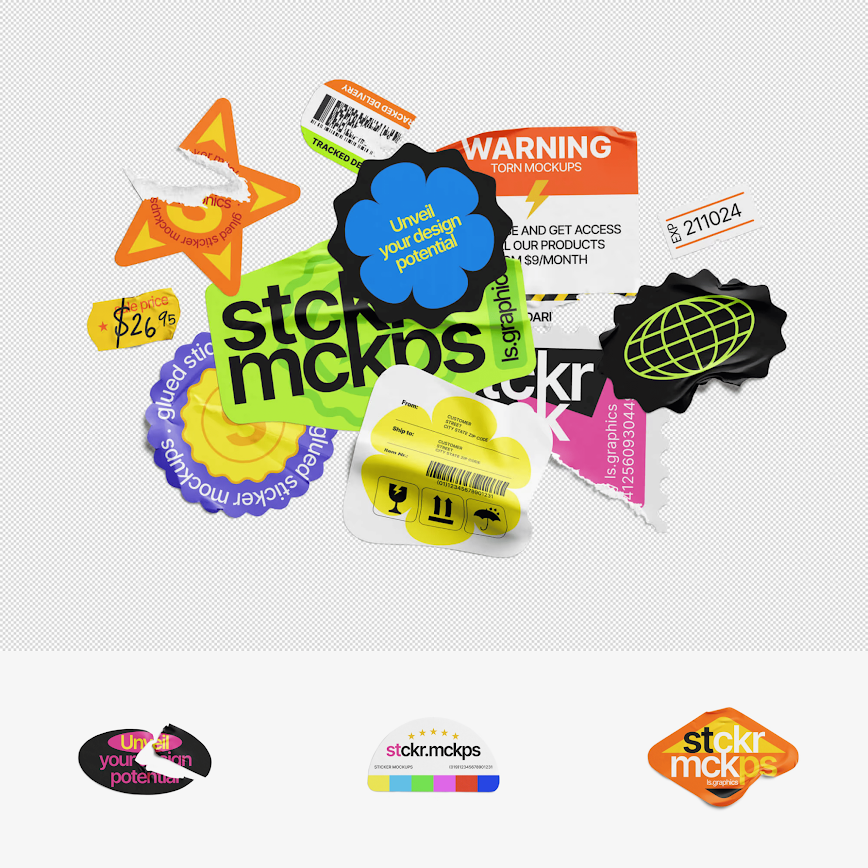
Design resources such as ls.graphics have built out entire libraries around this idea — offering scenes with realistic surfaces, lighting, and textures precisely because generic renders don’t produce the same emotional response as something that looks lived-in.
Where Buyer Psychology Meets Practical Design
The endowment effect isn’t a marketing trick in the manipulative sense — it’s simply acknowledging how people naturally process ownership. A sticker mockup placed on a personal item does the imaginative work for the customer, shortening the gap between “that’s a nice design” and “that’s already part of my stuff.”
For sellers, this means product photography isn’t just about clarity anymore. It’s about staging a believable moment of ownership before the sale even happens. A sticker shown on a real laptop, a real bottle, or a real skateboard isn’t just marketing — it’s a small, deliberate nudge that lets the customer’s own psychology do most of the persuading.